When it comes to Obsessive-Compulsive Disorder (OCD), there is a lot of confusion. Most laypeople believe it is simply being very particular about how you organize your things.
Those somewhat more familiar with psychology may equate the condition with a compulsive need to perform repetitive actions, such as washing hands.
The truth is that it is those things… and much, much more.
OCD is less about a single behavior and more about a set of recurring mental patterns. Drawing from my own experience, I believe the “OCD mindset” is composed of the following elements:
- An aversion to uncertainty.
- A need for control.
- The feeling that something is not quite right.
- Taking responsibility for things beyond your control.
The content of your obsessions may change, but these elements are almost always present.
OCD likely has a genetic component, but it often lies dormant until triggered by a traumatic life event. In my case, that was the passing away of my father when I was around 12 years old.
My OCD started then, but it has since taken on many forms. My battle with OCD has often felt like an arms race. As soon as I learned to be okay with one particular theme, it would metamorphose into something new, usually something I had never seen or heard about before.
In this post, I would like to give you a tour of my OCD, from its more rudimentary beginnings to the increasingly complex and sophisticated forms it has taken over the years. I hope it helps demystify the condition for non-sufferers and helps others feel less alone in their experience.
The Quest for Balance: Just-Right OCD

The summer in which my father died, something shifted in me. It was as if there had been a big red button inside my head my whole life. It had always been there, dormant, until the tiny, mischievous gremlin that lives between the folds of my brain decided to push it.
When that button was pushed, a very well-defined feeling of incompleteness, of something not quite right, crept into my awareness. And it wasn’t abstract. It attached itself to something very concrete in the real world.
In this case, it was a small patch of dirt in the garden where we kept a little farm.
What exactly was wrong with that patch of dirt, I could not tell you. But I was certain that something about it was off, even though no one else in the world would have noticed it.
The first day this feeling appeared, I dealt with it pragmatically: I tried to fix the patch of dirt with my own two hands. Delicately and diligently, almost like an artist shaping a new creation, I nudged and pushed the soil here and there until it felt right.
I spent maybe five or ten minutes working on it and then left. I wasn’t totally satisfied, but I figured I would eventually forget about it.
I didn’t.
The next day, I woke up with the same nagging feeling. I went back to try to fix it again, but this time I spent longer, perhaps twenty minutes. As I worked on this thankless crusade for balance, I grew more and more frustrated. It would never be right.
That same day, I returned in the afternoon and spent another ten or fifteen minutes trying to fix it, trying to achieve this imaginary sense of balance. When I was done, I went back inside, only to find that I was still thinking about it, still trying to solve it in my head.
And just like that, something small and insignificant, something no one else would have noticed, began to take up more and more space in my mind.
Control Through Rituals: Magical Thinking OCD
The whole ordeal with the patch of dirt lasted a couple of weeks. Eventually, I was able to stop myself from going back to the garden, and the obsession gradually faded.
But almost immediately, something else took its place.
One evening, as I was getting ready for bed, I had the strange feeling that I needed to do something very precise in order to fall asleep. I needed to open and close the wardrobe exactly three times, and each repetition had to feel right. If anything felt even slightly off, I had to start again from the beginning.
That evening, I gave in to the urge. When I was finished, I felt a sense of relief and went to bed.
The next night, I tried to go to sleep normally, but I couldn’t. I needed to perform the wardrobe ritual again. Otherwise, I feared, I wouldn’t be able to sleep at all.
I stood in front of the wardrobe and carried out the ritual. This time, it took longer. I had to repeat several sets, each consisting of opening and closing the door three times.
Even after finishing, I still felt like I hadn’t done it quite right. A sense of dread began to grow inside me as I realized that something very important was at stake: my sleep.
Sleep, I had always been told, was essential. I needed at least eight hours to function well, to perform at school, to get good grades. It wasn’t optional. It was necessary.
Looking back, what was happening is clear. Because of my rigid beliefs about sleep, I developed a compulsion that actually made it harder for me to sleep. I was trying to control sleep, and the only way my mind found to do that was through this ritual.
This went on for months. During that time, I got very little sleep. Some nights, I didn’t sleep at all. I would lie in bed with my eyes wide open, watching the sun rise, filled with dread at the thought of facing another long day of school without rest.
The whole ordeal ended in a surprising way. One day, I realized that it had been months since I had slept properly… and yet I hadn’t missed a single day of school, and my grades were fine.
It dawned on me that perhaps sleep wasn’t as important as I thought. As I loosened my rigid beliefs around sleep, something changed. That very same night, I slept like a baby.
Putting the Weight of the World on My Shoulders: Real Event OCD

Fast forward several years. I am now a university student, traveling through East Asia with classmates and professors as part of a special program. We are near Guilin, in China, and a couple of friends and I decide to rent bikes and go for a ride.
As I ride, I notice a young girl by the side of the road. She is maybe eight or nine, though I don’t get a good look at her.
A thought appears: Is she okay? Does she need help?
I consider stopping, but my classmates are already ahead of me. If I stop, I’ll lose them. So I keep going.
We return to the hotel. Everyone is chatting and enjoying themselves, but I am somewhere else entirely. I am stuck on that moment.
I begin replaying the scene over and over. With each replay, more details emerge. Now she looks disheveled. Now she seems distressed. I start to convince myself that she is in urgent need of help, that something terrible will happen if I don’t intervene.
That evening, I spend hours trapped in these thoughts. The more I think, the more anxious I become. I tell myself that the next morning I will go back and find her.
I never do.
Eventually, I tell myself it’s too late, that she won’t be there anymore. Slowly, I calm down and fall asleep.
Looking back, it is clear that this episode was driven by an inflated sense of responsibility, a common feature of OCD. This experience could be classified as real event OCD: I experienced something ambiguous, and my mind filled in the gaps in the worst possible way. The more I obsessed, the more real and urgent the situation felt.
The Fear of Uncertainty: Relationship OCD
Fast forward again. I am now in my 30s and in a serious relationship.
Before we started dating, we had been good friends for over a year. We got along well, shared similar values, and saw the world in similar ways. When we eventually moved in together, it felt natural.
On the surface, everything was great. We were both growing, both professionally and personally, and everyone thought we made a great couple.
But inside my head, things were different.
A small voice was always there, whispering: Yes… but is she the one? Is there someone better out there for me?
That voice never left. It was there during quiet evenings, during time with friends, during conversations about our future.
Every few months, the tension would build to the point where I felt I had to do something about it. I would sit her down and tell her that something didn’t feel right, that although I loved her, I wasn’t sure.
She would respond with understanding. She would say that, although she wasn’t entirely sure I was the man of her life either, she still believed in the relationship. She would tell me that I made her life better, that we improved each other’s lives. And then, almost inevitably, she would start to cry.
After these conversations, I felt relief. The doubt and the guilt would temporarily fade. After all, if she wasn’t 100 percent sure either, then I wasn’t doing anything wrong by continuing the relationship.
But the doubt and the guilt always came back.
This was a textbook example of relationship OCD. I was unable to tolerate the uncertainty of not knowing whether she was “the one.”
What I regret most is how many moments I missed: moments where I could have been present with her but instead was trapped in my own mind, trying to resolve an unanswerable question.
What If I’m Dangerous: Harm OCD & False Memory OCD
Another theme that has come up repeatedly in my adult life is the fear that I might hurt people in the future, or that I have already done something terrible.
OCD often targets the things we care about most, generating intrusive thoughts that feel shocking precisely because they are so deeply at odds with our values. In fact, the more you value something (like being kind, safe, and responsible) the more OCD can latch onto it.
Let’s start with an example that is difficult for me to share, but one I’m including because I know how isolating these thoughts can be for people with OCD.
I have always felt comfortable around children, and I’ve always enjoyed spending time with them in a normal, caring way. One day, while I was playing with a group of children, a little girl sat on my lap. Almost immediately, an intrusive thought entered my mind: What if I get aroused?
The thought horrified me. I did not want it, and I did not agree with it, but once it appeared, I couldn’t stop monitoring myself. That evening, I became consumed by doubt. Had I gotten aroused? What would that mean about me? What if I were a danger to children?
From there, the obsession took on a life of its own, becoming a textbox example of false memory OCD. I replayed the moment over and over, searching for certainty, for proof, for some definitive answer that would relieve me of the fear. But like so many OCD spirals, the more I analyzed it, the worse it became.
After a few weeks of rumination, I spoke with people close to me and with my therapist, which helped. Even so, for a long time afterward, I avoided being around children altogether, just in case.
What made this experience so distressing was not any real desire or intention, but the meaning I attached to the thought. OCD had taken something I valued (being a safe, caring person) and turned it into a source of terror.
A few years later, I developed the obsession that I might harm people close to me, like my girlfriend or my sister. This is classic harm OCD.
I would scan my thoughts in search of anything that could be interpreted as dangerous: did I just wish this person would die? Did I imagine myself hurting them?
At the same time, I would spend hours trying to reason with myself, explaining why these thoughts didn’t mean I was a cold-blooded killer. The energy spent on these compulsions left little space for anything else.
This was the obsession that broke the camel’s back. It was at this point that I decided to talk to a therapist.
I was quickly diagnosed with OCD and given some very helpful guidance on how to relate to these thoughts. I began to understand that the reason they affected me so deeply was because I treated them as meaningful.
With time, I learned to see them for what they are: thoughts, random mental events that don’t require a response.
I started allowing them to be there without trying to solve them. And gradually, their weight began to fade.
I stopped ruminating and rationalizing. I no longer felt the need to. Thoughts are just thoughts.
And that, broadly speaking, covers the main OCD themes I’ve experienced. Within each, there were many more obsessions than the ones described here, but there isn’t space to go into all of them.
Reliving these experiences has been difficult, and I truly hope that someone can benefit from this. If you see yourself reflected in any of these situations, perhaps this can serve as a reminder: you are not a horrible person, but someone with a very tricky mind, one that targets what you care about most.
OCD is a complicated condition. It feeds on uncertainty and thrives on the illusion that we must control what lies beyond our reach.
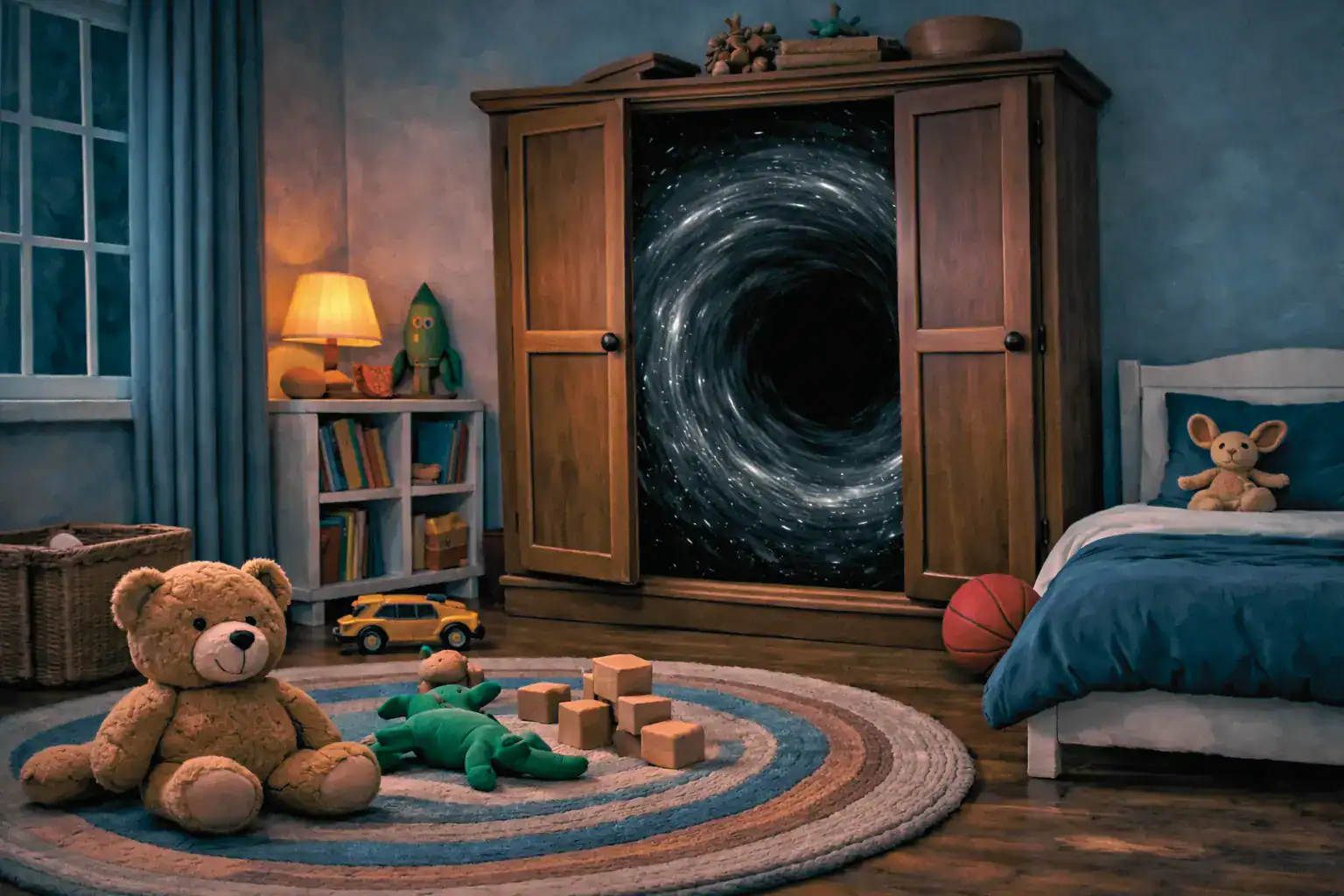
One final note about what OCD is like. Sometimes, as an adult, I get flashbacks to a scene from my childhood. I must be three or four years old, sitting on the floor of my room, playing with my toys.
For some reason, I am alone.
I feel drawn to the wardrobe behind me. I don’t know what’s inside, but I’m sure it is something dark, something that could swallow me whole like a black hole.
I don’t know whether this memory happened exactly as I remember it, or why it has stayed with me so vividly. But over time, I have come to see whatever was inside that wardrobe as a representation of my OCD.
It is always there, trying to pull me in. And if I let it, it can take me away from the things that matter most.
Now, as back then, I have a choice: I can turn toward it, open the door, and get lost inside it. Or I can walk away and return to what actually matters: my family, my friends, life
Leave a Reply